
Basements and house slabs
A warm floor underfoot and even heat, with no baseboards or vents.
Turnkey work, from A to Z: calculation, design, loop installation, boiler, manifolds, pumps and controls, then commissioning and maintenance. For homes, basements, garages and commercial buildings.
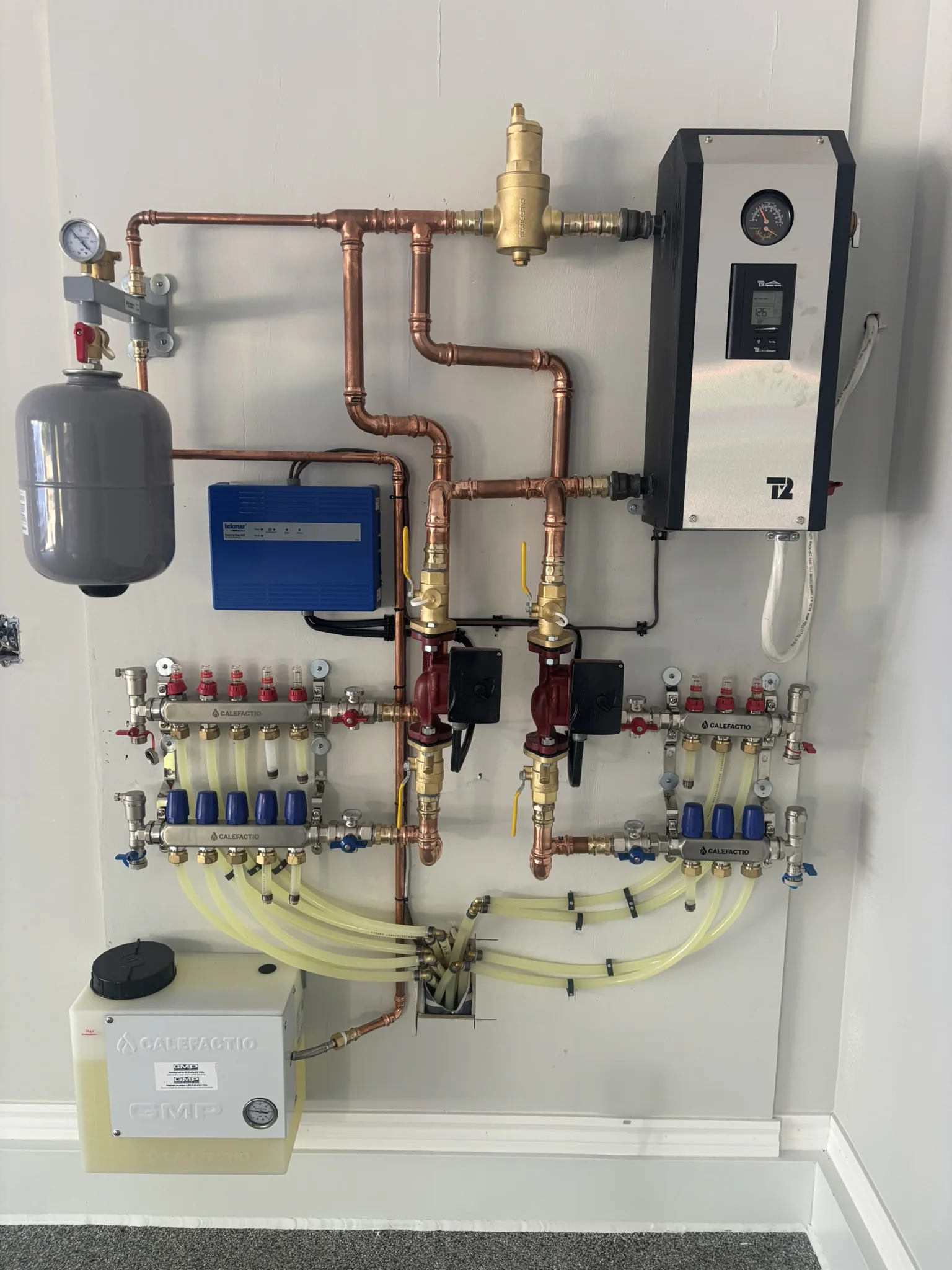
The boiler heats the water or glycol, the pump circulates it and the manifold splits it into PEX loops embedded in the slab. The floor becomes a large warm surface that heats the whole room, gently and silently.
Swipe to see the whole diagram →
A warm floor underfoot and even heat, with no baseboards or vents.
With glycol, the system resists freezing even if the building isn’t heated all the time.
We design the system with your contractor before the concrete is poured.
Warehouses, shops, farm buildings: efficient floor-level heat for large spaces.
We choose the fluid based on how the building is used, then size the boiler and pump to match.
Best heat transfer. For homes and spaces heated year-round.
Freeze protection. For garages, workshops, cottages and buildings that may go cold.
One team handles everything, from A to Z, with quality products we know well.
Electric (Thermo 2000) or condensing natural gas and propane (NTI). They heat the water or glycol that flows through the floor.
Calefactio manifolds split the flow between loops, with flow meters for balancing and actuators for zone control.
Low-energy variable-speed Grundfos pumps move the fluid at just the flow needed.
Laid in loops in the slab or under the floor, with spacing calculated from each room’s heat loss.
Zone thermostats, zone relays, outdoor sensor and mixing valve to keep the right water temperature.
Expansion tank, air and dirt separator, balancing and fill valves: everything for a quiet, long-lasting system.
 Electric boilers
 Circulator pumps
 Manifolds and components
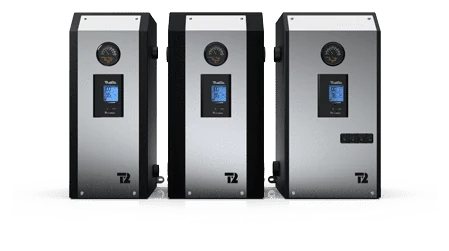


3 to 12 kW · compact size for small spaces
 New

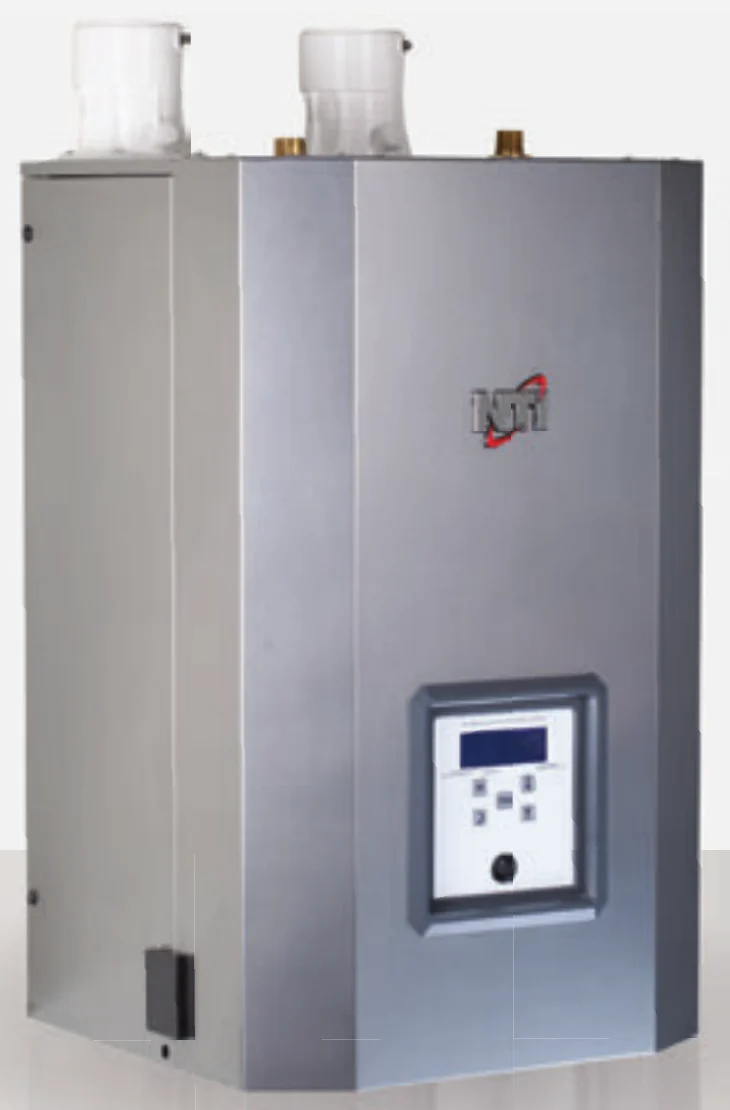
Heat-only or Combi (domestic hot water included) · 95% AFUE
 New
High-efficiency boiler, heat-only or Combi
Room-by-room heat-loss calculation.
Choice of boiler, fluid, zones and loop spacing.
Loops laid before the pour, then boiler, manifold and pumps.
Filling, purging, balancing and control setup.
Annual check of the boiler, pressure and glycol.
It is one of the most comfortable ways to heat, and it runs at low temperature: the water often circulates at only 30 to 45 °C. The cost mainly depends on the heat source (electric, gas or propane boiler), the insulation under the slab and the area. We give you an estimate after the heat-loss calculation.
Water transfers heat better and suits homes that are always heated. Glycol (antifreeze) protects the piping from freezing: we recommend it for a garage, workshop, cottage or building that may go unheated. We size the pump and boiler for the fluid you choose.
Loops are normally laid before the concrete is poured, ideally over rigid insulation. For an existing slab, there are over-the-floor options (panels or a thin screed): we assess what’s possible during the site visit.
An electric boiler, like the Québec-made Thermo 2000 Mini, is simple, compact and combustion-free. A condensing natural gas or propane boiler, like the NTI FTV or Compass, is very efficient and can also make domestic hot water. The right choice depends on the heating load and the energy available.
Yes. Each zone has its own thermostat, and the manifold, fitted with actuators, opens or closes that zone’s loops. We plan the zones at the design stage.
Yes: boiler check, pressure and expansion tank check, air purging, glycol and pump testing, temperature adjustment. We also repair systems installed by others.
Free, no-obligation quote. We point you to the best solution for your home — not the best promotion.